How to Choose DGCA Ground Classes: 12 Questions to Ask Before You Pay
TL;DR: DGCA does not accredit ground coaching institutes, so the fee alone tells you nothing about quality. Verify the faculty by name, ask how mock tests are marked, confirm you can buy single papers instead of a full package, and get the fee breakdown and refund terms in writing before you pay.
Flying Star Aviator Academics Team·14 min read·Last verified
DGCA CPL & ATPL ground instruction, Dwarka, New Delhi. Figures on this page are checked against the regulator’s own documents — how we check them.
DGCA does not accredit or rank ground coaching institutes, so the fee you are quoted tells you nothing about quality on its own. Verify the syllabus is current, ask how mock tests are marked, confirm you can buy single papers, and get the exit terms in writing before you pay. Everything else is secondary to those four checks.
Every DGCA candidate who decides against pure self-study runs into the same problem: dozens of institutes claim to be the best, none of them are DGCA-approved in any sense that matters, and the fee alone does not separate a good one from a study hall with a whiteboard. This guide is a verification checklist, not a ranking, from a ground training institute that has nothing to gain from which one of our competitors you choose.
Is there such a thing as a DGCA-approved ground class?
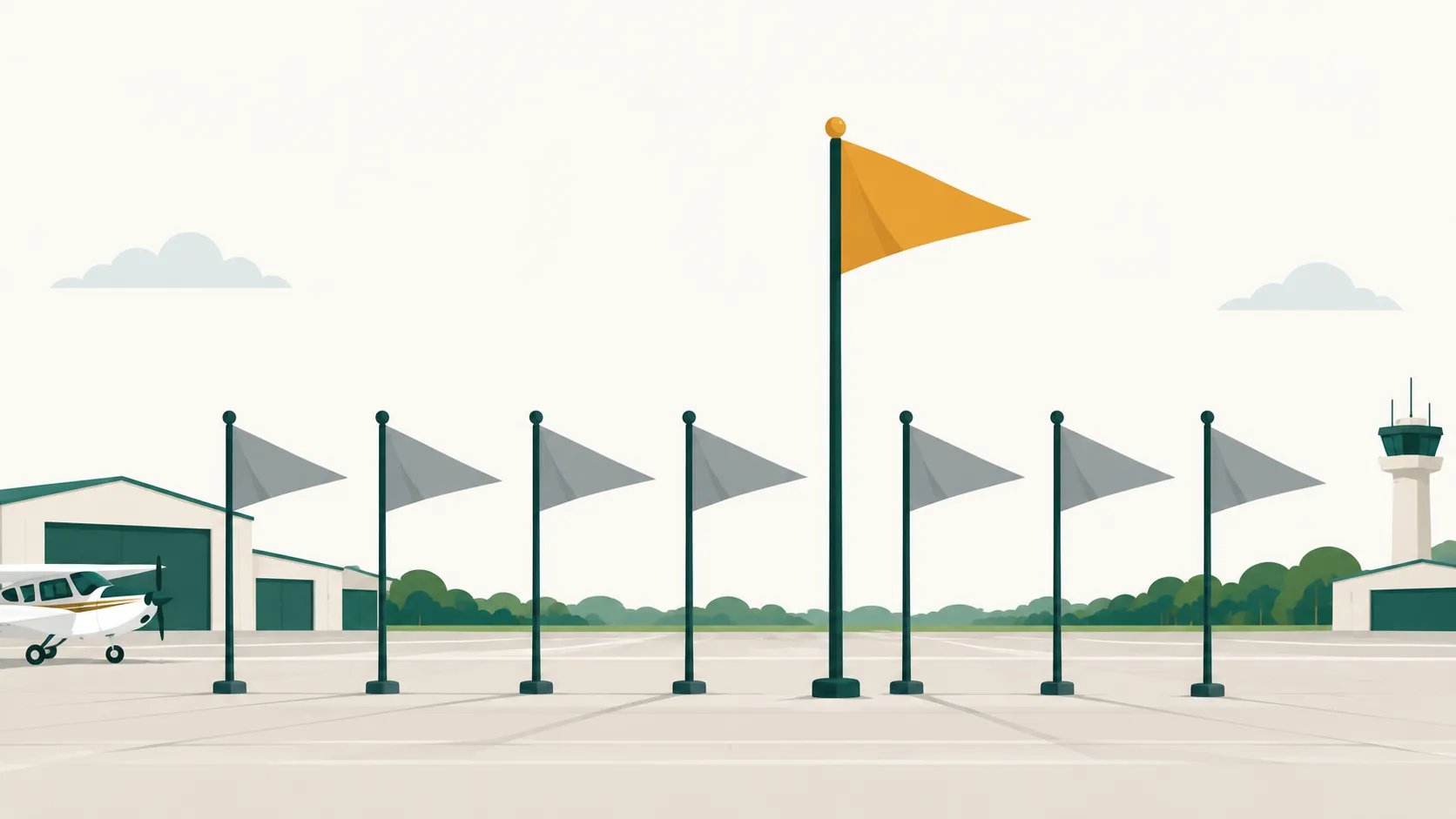
No. DGCA approves the Flying Training Organisations that give you flight hours, and it conducts your theory examinations itself through the Central Examination Organisation. It does not maintain a list of approved ground coaching providers. Any institute advertising "DGCA-approved ground classes" is describing itself, not a status DGCA has conferred.
This matters because it removes the one shortcut candidates look for. You cannot check a regulator's list the way you can for a flying school. You have to evaluate the institute the way you would evaluate any other paid service: on what it actually teaches, who teaches it, and what happens if it does not work out. The rest of this guide gives you the specific questions for that evaluation.
What DGCA does regulate directly is the eligibility to sit the papers in the first place: a computer number issued by the Central Examination Organisation, and a 10+2 pass with Physics and Mathematics.[1] A ground class can help you through that registration, but it cannot substitute for it, and it cannot waive it either.
Illustration in production
The regulator approves examinations, not coaching.
What should a ground class actually cover, paper by paper?
A CPL candidate sits four theory papers common to most routes, an ATPL candidate sits a fifth. Before you evaluate any institute, know what each paper demands, because that is what determines whether its teaching method fits the subject.
Paper
Applies to
What good teaching looks like here
Air Navigation
CPL and ATPL
Worked numericals with correction on your method, not just the answer. Chart work and flight planning are the hardest part to learn from a book alone.
Aviation Meteorology
CPL and ATPL
Concept teaching with Indian monsoon and regional weather examples, since much of the syllabus is generic atmospheric science applied to local conditions.
Air Regulation
CPL and ATPL
Teaching built on the current CAR and circular text, re-checked every session. This is the paper that goes stale fastest, and a good class proves it tracks revisions.
Technical General
CPL and ATPL
Structured coverage of airframes, powerplants, instruments and systems, usually the most conceptually stable of the papers.
Radio Aids and Instruments
ATPL only
Radio navigation and the instrument suite taught with diagrams and worked examples, not read from a manual.
Technical Specific, the paper written against the aircraft type you nominate, is deliberately left off this table. No general ground class package teaches it properly, because it depends on the aircraft manual for your specific type. Treat any institute that bundles it into a generic package with suspicion.
A whiteboard split into five labelled columns for the DGCA CPL and ATPL theory papers, with an instructor's hand pointing to the Air Navigation column where worked numerical examples are visible.
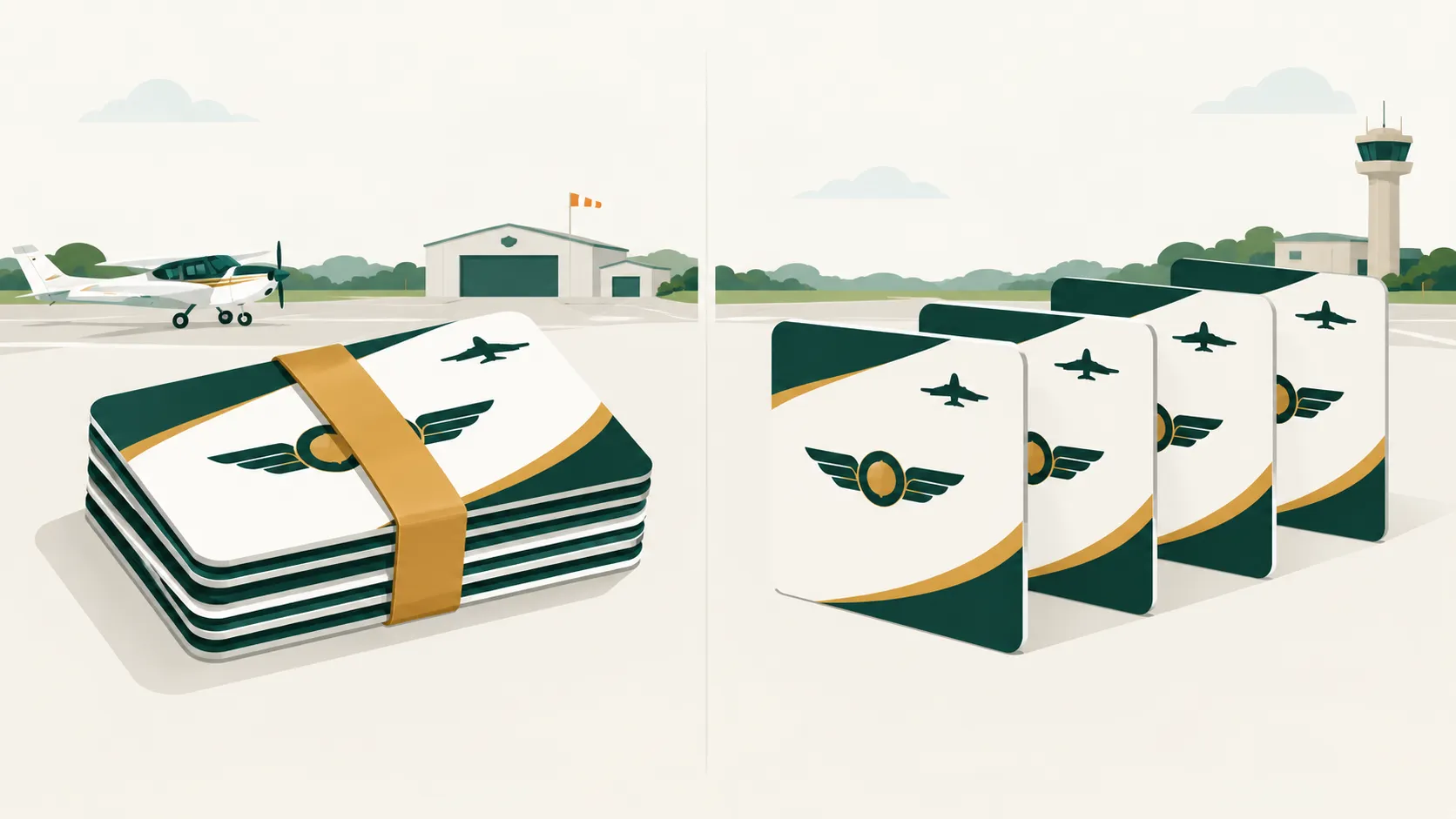
A package and single papers are not the same purchase.
How do you check the faculty are actually qualified to teach the numericals?
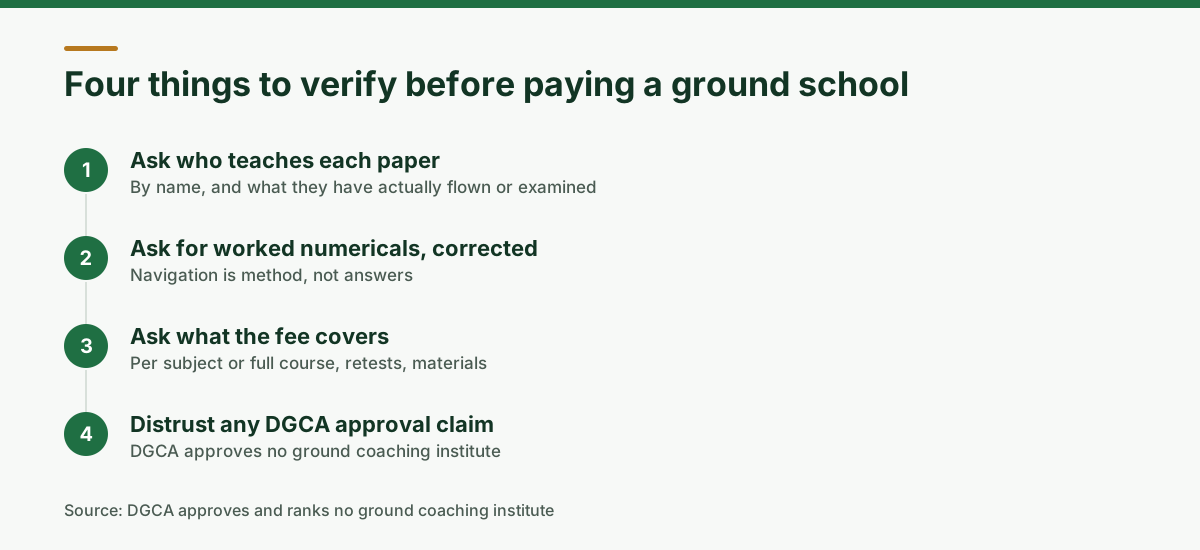
Ask who teaches Air Navigation by name, and what they hold. A generalist reading slides can walk you through the theory of dead reckoning; someone who has flown, examined or taught it for years can tell you where your working goes wrong, which is the harder and more valuable skill.
Extend the same question to Air Regulation, since that paper depends on someone actively tracking DGCA circulars rather than teaching from a fixed handout written years ago. A reasonable follow-up is to ask which CAR revision the current Air Regulation material is built on. An institute that cannot answer specifically is telling you it is not maintaining the material, whatever the brochure says.
Faculty turnover is worth asking about directly too. If the person who taught last year's batch has left, ask who replaced them and what handover happened. A single strong instructor is not a system; a system survives one person leaving.
Illustration in production
What a realistic timeline looks like.
How many mock tests should you expect, and how should they be marked?
Ask for the number of full-length mock papers included, and whether each one comes back with marked errors and a discussion of where you went wrong, not just a score. An unmarked mock tells you a number. A marked one tells you what to fix.
Mock testing matters because the DGCA pass mark is 70% in each paper with no aggregate across subjects, so a strong Meteorology score cannot rescue a weak Air Navigation one.[1] You need to know, paper by paper, whether your 70% is comfortable or borderline before the actual exam tells you at a cost. Ask when mocks start in the course, since a mock in the final week is diagnosis too late to act on.
Can you buy a single paper instead of a full package?
Ask directly, and treat the answer as a signal about the institute's confidence in its own teaching. A provider that will sell you Air Navigation alone, at a fair per-paper rate, is telling you it believes each part of its teaching stands on its own. One that only sells a bundled package covering every subject is optimising for its own revenue, not for what you specifically need.
This question also has a direct financial use. If your Physics and Mathematics are current and you are confident in Technical General and Meteorology on your own, buying only Air Navigation and Air Regulation can cut your coaching spend substantially while still covering the two papers most candidates find hardest to self-correct. Our comparison of ground classes against self-study goes into that hybrid approach in more depth if you have not yet decided whether to take any classes at all.
What does the fee actually include, and what is billed separately?
Get an itemised, per-paper fee in writing before you commit to a package. Ground class pricing varies enormously by city, format and provider, and a single headline number hides more than it reveals unless you know exactly what is and is not inside it.
Ask for this, in writing
Why it matters
Fee per paper, not just per package
Makes providers genuinely comparable and lets you buy only what you need
Whether study material and question banks are included
These are commonly charged as separate add-ons after enrolment
Whether mock tests are included or charged per attempt
A package that charges per mock discourages the repeated testing that actually helps
Portal and computer-number registration assistance
Procedural help has real value; a rejected application costs you a session
Repeat-attendance policy if you fail a paper
Get this before you pay, not after a result you did not expect
Refund terms if you withdraw partway through
A policy that exists only verbally does not exist
Add the DGCA examination fee on top of anything the institute quotes, since it is fixed by the regulator and does not change with your choice of coaching: ₹2,500 per paper, non-refundable once submitted. DGCA publishes no separate Online On-Demand Examination fee.[1] A resit is a repeat of that fee plus the coaching institute's own repeat-attendance charge if it has one, so ask about both before you assume the quoted fee is the whole cost.
An itemised ground-class fee sheet on a desk, with per-paper costs, study material, and mock-test charges each listed on a separate line and a calculator beside it.
What is a realistic timeline to clear all your papers?
Ask for the batch's typical timeline from first class to last paper cleared, and ask how that compares with what actually happened for the most recent batch, not the schedule printed on the prospectus. A course structured to finish in four months on paper is not four months if half the recent batch is still sitting resits at month seven.
Two rules from the DGCA rulebook shape what a sensible timeline looks like. The pass mark is 70% per paper with no aggregate, so each subject has to be genuinely ready on its own before you sit it. And a cleared CPL or ATPL theory paper stays valid for five years, which is what makes a staged timeline realistic instead of forcing every paper into one sitting.[1] A ground class that pushes you to sit four papers in one session to finish faster is optimising for its own course calendar, not for your pass rate.
A pacing check you can ask for directly
How many papers does a typical student in this batch sit in their first session?
What proportion of the last batch cleared every paper they attempted first time?
If someone falls behind the batch schedule, what happens to their seat?
Do ground classes cover RTR(A) as well, or is that separate?
Ask specifically, because the answer is usually no. RTR(A), the Radio Telephony Restricted (Aeronautical) licence, is a distinct examination with its own written and practical components, generally sold as its own course rather than bundled into CPL or ATPL theory coaching. Confirm which authority currently administers it and how registration works before you assume your ground class package has it covered. Our separate RTR guide sets out what that examination actually involves.
Institutes that do offer RTR(A) preparation alongside theory coaching should be able to explain how the two are scheduled against each other, since studying both at once without a plan is a common way candidates fall behind on both.
What should you ask current or recent students, not the institute?
Ask specific, checkable questions rather than general ones. "Is the teaching good" produces a polite answer. "Which paper did you clear first, and how many attempts did it take" produces something you can act on.
Which paper did you clear first, and did you need more than one attempt?
Were your mock tests marked with feedback, or just scored?
Did the Air Regulation material feel current, or did you find contradictions with what you read on the official portal?
Did the instructor who taught your batch finish the course, or did you get a replacement partway through?
What do you wish you had asked before you paid?
That last question is worth asking at every institute you consider. Speak to students without staff present if you can, since answers change when the person being asked knows the institute is listening.
A candidate sitting at a desk checking off items on a printed twelve-point checklist, with a ground-class fee quote and a notebook of DGCA past-paper questions beside them.
The 12-question checklist to take to every institute
Take this list with you and fill it in on the spot rather than relying on memory afterward. An institute that answers all twelve clearly, and in writing where it matters, has already separated itself from most of the market.
#
Verify this
1
Which CAR revision the current Air Regulation material is built on
2
Who teaches Air Navigation by name, and what they hold
3
Number of full-length mock papers included, and whether they are marked with feedback
4
When in the course the first mock is scheduled
5
Whether single papers can be purchased instead of the full package
6
The fee broken down per paper, in writing
7
What is billed separately: study material, question banks, repeat mocks
8
The repeat-attendance policy if a paper is not cleared first time
9
The refund policy if you withdraw partway through, with timelines
10
Whether the course helps with computer-number and portal registration
11
Whether RTR(A) preparation is included, and with which authority it is registered
12
Answers from at least two current or recent students, asked without staff present
What red flags should end the conversation?
Walk away from a guaranteed pass, from pressure to pay the full package before you have seen a single class, and from any reluctance to put the repeat-attendance and refund policy in writing. None of these are matters of preference. Each one shifts a risk that the institute is better placed to carry onto you instead.
Red flag
What it usually means
A guaranteed pass or guaranteed 70%+ score
No teaching can guarantee an individual's exam result; the claim is sales language, not a policy
Pressure to pay the entire package upfront
Urgency is most often applied where a closer look would cost the sale
Vagueness about which CAR edition is taught
Either the material is not being actively maintained, or nobody is tracking who is
Mock tests offered only as an extra-cost add-on
Discourages the repeated testing that most improves your actual result
No written refund or repeat-attendance policy
A policy that exists only verbally does not exist when you need it
Discouragement from speaking to current students unsupervised
The classroom experience may not match the sales conversation
The short version
DGCA does not approve or rank ground coaching institutes, so the fee alone tells you nothing. Verify the faculty by name, ask how mock tests are marked and when the first one runs, confirm whether you can buy single papers, and get the fee breakdown, repeat-attendance policy and refund terms in writing before you pay. If you are still deciding whether to take ground classes at all, our comparison of ground classes against self-study is the place to start, and our own DGCA ground classes are built to answer every question on this checklist directly. Candidates weighing a flying school alongside their theory coaching can also read our guide on how to choose a flying school in India, and the wider CPL route is set out separately for anyone still mapping the whole path.
Frequently asked questions
Is there an official list of DGCA-approved ground classes?+
No. DGCA approves the Flying Training Organisations that provide flight hours and conducts the theory examinations itself through the Central Examination Organisation. It does not accredit or maintain a list of ground coaching institutes, so a "DGCA-approved" claim on a brochure is self-description, not a conferred status.
Can I buy a single DGCA subject instead of a full ground class package?+
Ask directly, since policies vary by institute. A provider willing to sell one paper at a fair per-paper rate is signalling confidence in that specific teaching, and buying only the papers you need can cut your coaching spend if your fundamentals are already strong in the rest.
How many mock tests should a good DGCA ground class include?+
Enough to test each paper more than once, with marked feedback on where your working went wrong rather than a bare score. Ask when the first mock is scheduled in the course; a mock in the final week is diagnosis too late to act on.
What is the DGCA exam pass mark, and does it apply per paper or overall?+
70% in each paper, with no aggregate across subjects. A strong score in one paper cannot offset a weaker one, which is why mock testing needs to check readiness paper by paper rather than as an average.
How long does a cleared DGCA theory paper stay valid?+
Five years. That window is what makes a staged timeline realistic, and it is why a ground class pushing you to sit every paper in one session to finish faster is optimising for its own schedule rather than your pass rate.
How much does the DGCA exam itself cost, separate from the coaching fee?+
₹2,500 per paper, per DGCA's published Flight Crew FAQ. No separate Online On-Demand Examination fee is published, despite a ₹5,000 figure circulating widely without a source. The fee is fixed by the regulator, is not refunded once submitted, and sits on top of whatever the coaching institute charges.
Do DGCA ground classes include RTR(A) preparation?+
Usually not. RTR(A) is a separate examination with its own written and practical components, generally sold as its own course. Confirm which authority currently administers it and how registration works before assuming your ground class package covers it.
What is the single most useful question to ask current students?+
What they wish they had asked before they paid. It surfaces the gap between what the sales conversation promised and what the classroom actually delivered, more reliably than asking whether they are satisfied.
₹2,500 per paper, per DGCA's published Flight Crew FAQ. No separate Online On-Demand Examination fee is published, despite a ₹5,000 figure circulating widely without a source. The fee is fixed by the regulator, is not refunded once submitted, and sits on top of whatever the coaching institute charges.
Do DGCA ground classes include RTR(A) preparation?
Usually not. RTR(A) is a separate examination with its own written and practical components, generally sold as its own course. Confirm which authority currently administers it and how registration works before assuming your ground class package covers it.
What is the single most useful question to ask current students?
What they wish they had asked before they paid. It surfaces the gap between what the sales conversation promised and what the classroom actually delivered, more reliably than asking whether they are satisfied.
More: the FAQ for short sourced answers, the glossary for the terms, and our editorial policy for how these figures are checked.