
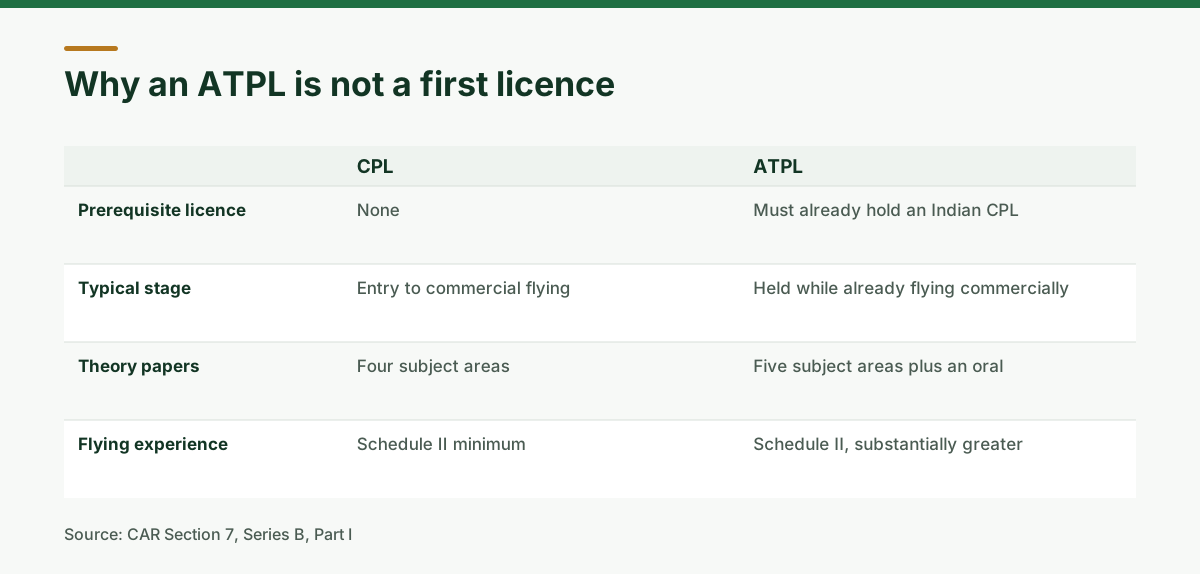
An Airline Transport Pilot Licence is the licence an airline captain holds, and it is not something you begin with. DGCA states that an ATPL applicant should already hold an Indian Commercial Pilot Licence, and that an ATPL is not issued on a single-engine aircraft. Those two conditions shape the whole path, and neither is stated on most pages about it.
Key facts
- An ATPL applicant should already hold an Indian Commercial Pilot Licence.Sourced: CAR Section 7, Series B, Part I
- The requirement is 70% in the theoretical knowledge examination and 70% in the oral examination, stated separately.Sourced: CAR Section 7, Series B, Part I
- A cleared ATPL paper is valid five years, the same as a CPL paper.Sourced: CAR Section 7, Series B, Part I
On this page
What DGCA requires to appear
| Requirement | What DGCA states |
|---|---|
| Computer number | Required, issued by the Central Examination Organization |
| Licence held | The applicant should have an Indian Commercial Pilot Licence |
| Defence alternative | 500 hours flying experience, of which 200 should be as Pilot-in-Command |
| Subjects | Air Navigation; Aviation Meteorology; Air Regulation; Radio Aids and Instruments; Aircraft & Engine / Instruments in general, specific and performance; and Oral |
| Pass mark | 70% in the theory examination and 70% in the oral |
| Validity of a cleared paper | Five years |
| Aircraft restriction | Not issued on a single-engine aircraft |
Source: DGCA CAR Section 7, Series ‘B’, Part I (Issue III, 24 March 2017, Revision 2, 13 February 2019).
Illustration in production
The three things people get wrong
Treating it as an alternative to the CPL
It is a progression from it, not a parallel route. If you do not hold an Indian CPL and you are not defence-qualified, the ATPL examination is not the next step — the CPL is. Planning an airline career should start from the CPL requirements, not from here.
Building hours on the wrong aircraft
Because an ATPL is not issued on a single-engine aircraft, multi-engine time is not an optional refinement to your logbook. A candidate who accumulates hours without attention to this can arrive at the application with experience that does not support the licence sought. Confirm what your hours need to look like before you buy them, with your FTO and against Schedule II.
Assuming the oral is a formality
It carries its own 70% requirement, stated separately from the written papers. It is a distinct hurdle, not a conversation at the end.

The flight-hours question, honestly
Almost every page about the Indian ATPL states 1,500 total hours including 500 as Pilot-in-Command. That figure appears on our own ATPL page as well.
The eligibility CAR above governs appearing for the examination. Flight-time requirements for licence issue live in Schedule II of the Aircraft Rules, 1937, which we have not been able to read directly — DGCA’s portal serves its homepage to non-browser clients, and we do not cite a number to a document we have not opened.
So: the 1,500-hour figure is widely stated and may well be correct. We simply cannot show you where it comes from. Get the current requirement in writing from DGCA or your operator before you plan a career around it, and treat any page quoting it without a citation — including ours, until we fix it — as unverified.
What comes after the papers
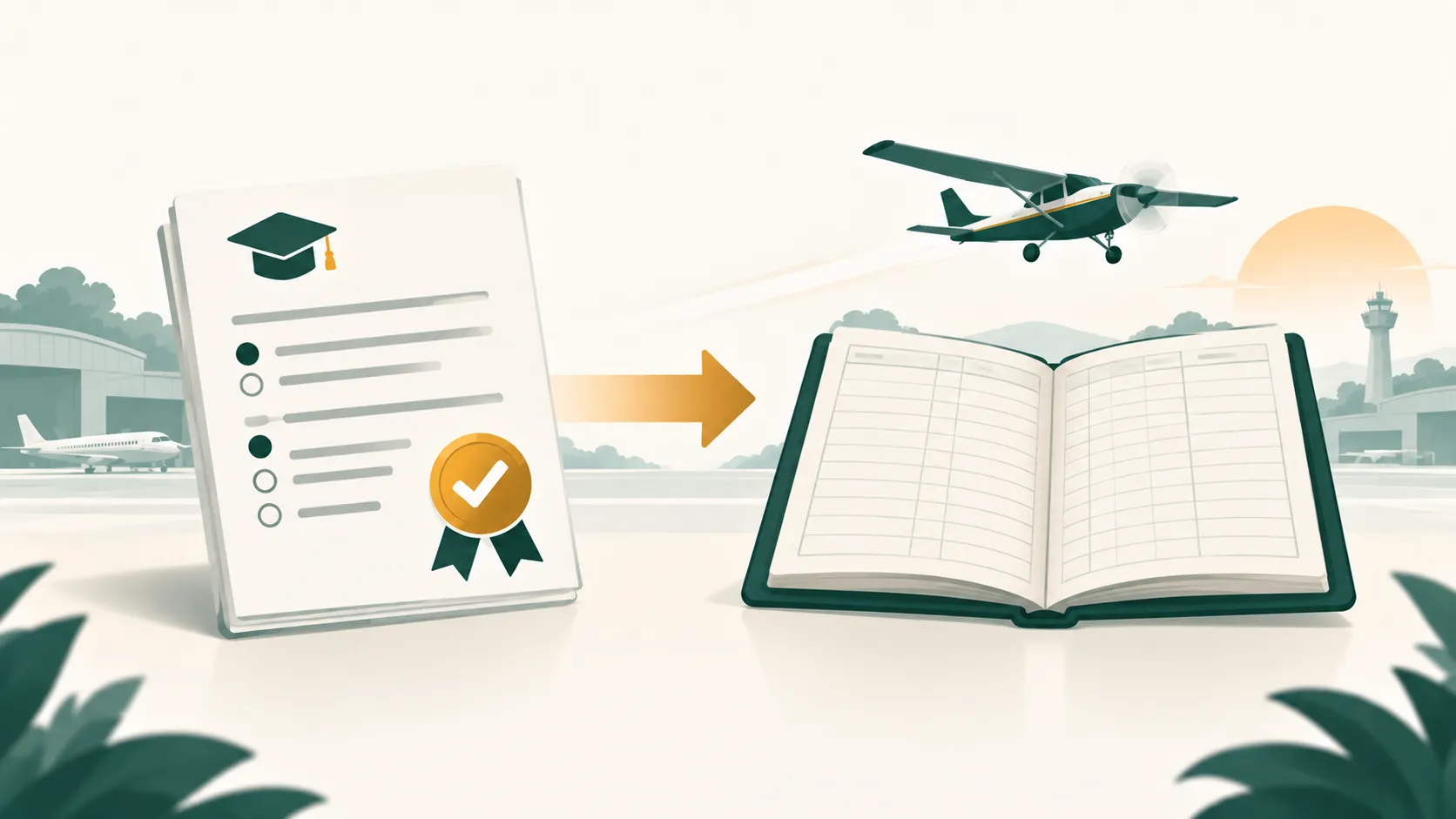
Clearing the theory is one component. Licence issue also involves flight experience, medical fitness and the practical requirements set out in Schedule II. The examination is the part this page can source; the rest is between you, your operator and the regulator.
Frequently asked questions
Can I apply for an ATPL without a CPL?
DGCA states an ATPL applicant should hold an Indian Commercial Pilot Licence. Defence personnel may instead qualify on 500 hours of flying experience, of which 200 should be as Pilot-in-Command.
Is an ATPL issued on a single-engine aircraft?
No. DGCA states an ATPL licence is not issued on a single-engine aircraft.
Which subjects does the ATPL examination cover?
Air Navigation, Aviation Meteorology, Air Regulation, Radio Aids and Instruments, and Aircraft and Engine / Instruments in general, specific and performance, plus an oral examination.
What is the pass mark for the ATPL exam?
70% in the theoretical knowledge examination and 70% in the oral examination.
How long does a cleared ATPL paper stay valid?
Five years, the same as a CPL paper.
How many flight hours does an ATPL need?
Flight-time requirements for licence issue are set in Schedule II of the Aircraft Rules, 1937. Pages across this vertical cite 1,500 hours including 500 as Pilot-in-Command; we have not verified that against Schedule II directly, so treat it as unconfirmed and ask DGCA or your operator for the current figure in writing.
Related
Requirements are revised. Verify against the current CAR and Schedule II before acting on any of this.
More: the FAQ for short sourced answers, the glossary for the terms, and our editorial policy for how these figures are checked.
- ATPL India
- ATPL Eligibility
- DGCA ATPL
- Airline Transport Pilot Licence
Sources
Every figure above traces to one of these documents. Where a claim could not be sourced, the page says so instead of repeating it.
- CAR Section 7, Series B, Part I
Related reading
- CareerFrozen ATPL Explained: What the Term Actually Means Under DGCA RulesTL;DR: Frozen ATPL is not a DGCA licence. It is industry shorthand, borrowed from EASA's integrated-course rule, for a CPL holder who has cleared ATPL theory but not yet logged the flight hours a full ATPL needs. DGCA's own CAR names only a CPL and an ATPL, with nothing labelled "frozen" between them.
- Licences & EligibilityCPL Eligibility After 12th: What DGCA Actually RequiresTo appear for DGCA Commercial Pilot Licence theory papers you need a computer number and a pass in 10+2 with Physics and Mathematics. Not Chemistry. There is no maximum age. Two rules, and both are stated wrongly across most of this vertical.
- Licences & EligibilityConverting a Foreign Pilot Licence: The Document and Currency ChecklistConverting a foreign licence to an Indian one turns on one clause most candidates read too late: your rating must be current, defined as at least 10 hours as Pilot-in-Command in the 24 months before you apply. Treat it as a deadline, not a footnote.